Design-Build
Design-Build
One contract. One accountable party. No gap between what was designed and what gets built.
In design-build, the owner signs one contract covering both design and construction. Gray Construction Services coordinates with the owner to establish the basis of design, then evaluates and assembles the consultant team, architects, engineers and specialists, best suited to translate that vision into a constructible set of drawings and specifications.
The structural advantage is the removal of a seam. Under traditional delivery, the owner holds two contracts, and when the drawings and the built work disagree, the owner sits between a designer and a contractor who each have reasons to point at the other. Design-build puts one party on the hook for the outcome.
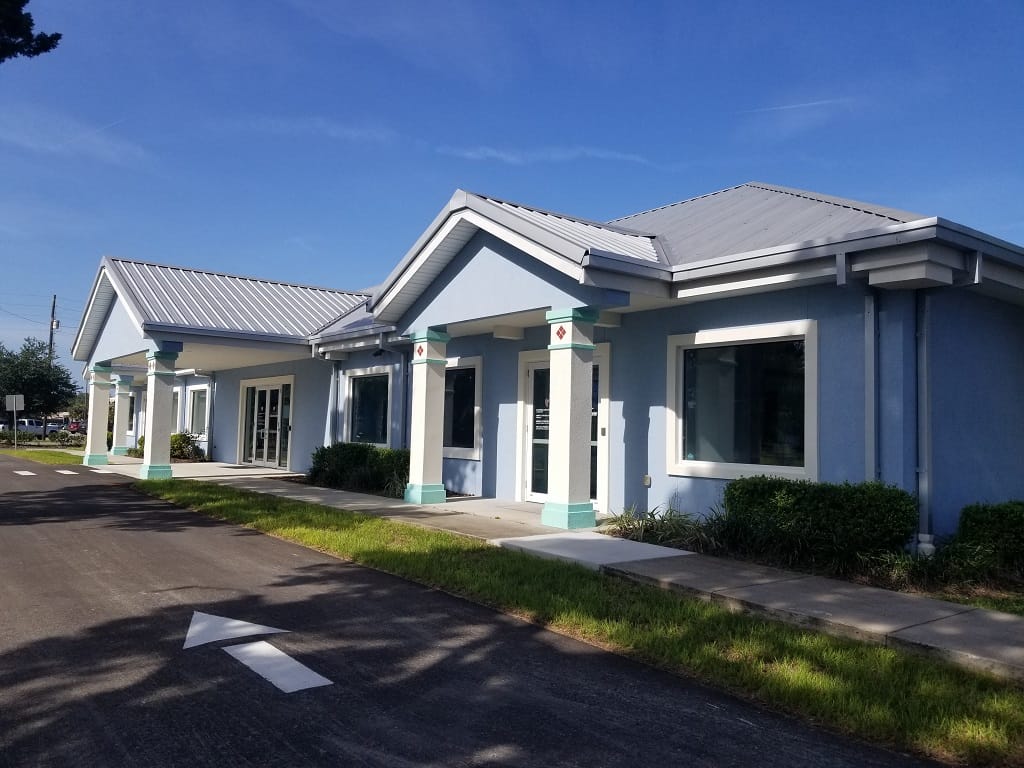
We delivered the Chiefland Health Center this way: a 6,300 square foot facility completed for approximately $921,000.
What single-point delivery changes
- One point of accountability. The owner has one contract and one party responsible for the finished building, from design concept through final construction.
- Overlapping design and construction. Site work and long-lead procurement can begin while later design packages are still in progress, compressing overall duration.
- Cost feedback from the first sketch. Pricing runs alongside design rather than after it, so the budget is a design constraint rather than a post-design surprise.
- A consultant team selected for the project. The design team is assembled for the specific building type, site and budget rather than inherited.
- Fewer owner-side coordination hours. Design and construction coordination happens inside the delivery team, not across the owner's desk.
When design-build is the right choice
Design-build works best when the owner has a clear performance requirement but not a fixed design, when schedule matters enough to justify overlapping phases, and when the owner would rather manage one relationship than referee two.
It is a strong fit for facility types with well-understood programs: clinics, offices, maintenance and operations buildings, and single-purpose commercial structures. It is less suited to projects where the design itself is the point and the owner wants an independent designer advocating for design intent against construction cost.
How the owner keeps control
The common objection to design-build is that combining design and construction removes the owner's independent advocate. In practice, control comes from the basis of design: the written performance and quality requirements the owner sets before the team is assembled. Those requirements are the contract, and the design must satisfy them.
Owners who want an additional layer often retain a separate owner's representative or criteria architect to review deliverables against the basis of design. That is a reasonable structure and we work within it.
The other control mechanism is the decision log. In a well-run design-build project, every choice that trades cost against quality is recorded, priced and approved by the owner rather than absorbed inside the team. An owner who receives that log throughout the project is not giving up oversight; they are receiving it in a more usable form than a stack of shop drawings.
How the phases overlap
The schedule compression in design-build comes from running work in parallel that would otherwise be sequential. Once the basis of design is settled and the site package is complete, site work, foundations and long-lead procurement can proceed while interior and systems packages are still being drawn.
That parallelism is also where the method's risk sits. Starting construction against an incomplete design only works if the incomplete portions are genuinely bounded, meaning the team knows what is still open and has priced the range. Where that discipline is missing, early starts produce rework rather than savings.
Practically, this means the packaging strategy is decided early and deliberately: which scopes are released when, what each release depends on, and which decisions must be closed before each package can go. That plan is a deliverable in its own right and it is worth an owner asking to see it.
Procurement and selection
Design-build teams are usually selected on qualifications or best value rather than low bid, because at selection there is no complete design to bid. Owners evaluate the team's record on comparable buildings, the strength of the proposed consultant team, the proposed approach, and price expressed as fee and general conditions against a stated program.
For a public owner, that means the solicitation has to define the program and the evaluation criteria well enough to make the comparison meaningful. Time invested in writing the criteria is repaid, because those criteria become the standard the delivered building is measured against.
Delivered this way
Common questions
How is design-build different from CM at-Risk?
In CM at-Risk the owner still holds a separate contract with the architect. In design-build, design and construction sit under a single contract with one party. Both bring the builder in early; they differ in who holds the design contract.
Can design-build be used on public projects in Florida?
Yes. Florida public agencies procure design-build work, typically through a qualifications-based or best-value selection process. The specific procedure depends on the agency and the statute governing it.
Does design-build cost less?
It often shortens schedule and reduces change orders arising from design and construction conflicts, which lowers total cost. It is not automatically cheaper on the construction line item alone.
Who chooses the architect?
Gray evaluates and assembles the consultant team, with the owner involved in the selection. Owners with an existing designer relationship can bring that firm into the team.
Other services
Pre-Construction Planning
The decisions that determine whether a project lands on budget are made long before anyone breaks ground.
Construction Management
Two delivery models, one obligation: act in the owner's interest from conceptualization through final turnover.
General Contracting
The traditional route, done properly: clear phases, competitive pricing, and one contractor answerable for the build.
Construction Consulting
Strategic guidance for owners who need a builder's read on a decision before they commit to it.