
Construction Management
Construction Management
Two delivery models, one obligation: act in the owner's interest from conceptualization through final turnover.
The construction manager delivery method exists because owners often need a builder's judgment before there is anything to build. Instead of hiring a contractor to execute a finished design, the owner hires a construction manager during planning, and that manager carries responsibility for cost, schedule and constructability all the way through turnover.
Gray Construction Services has delivered the majority of its recent work this way, including the $36.5 million Dixie County High School campus, the $8.8 million Fort White Elementary School, the $7.3 million Florida Gateway College STEM building and the $3.5 million Williston Airport terminal. Public owners in North Central Florida use this method because it gives them cost certainty and a single accountable party without giving up control of the design.
There are two forms, and the difference between them is where the financial risk sits.
Agency CM
Under Agency CM, Gray Construction Services acts as the owner's representative. We are contracted and responsible solely to the owner, and we hold no trade contracts. The owner contracts directly with the trades; we manage the work, the schedule and the coordination on the owner's behalf.
This model suits owners who want a professional builder on their side of the table and are prepared to carry construction risk themselves. It offers maximum transparency, because every trade contract and every dollar is visible to the owner, and no contractor markup sits between the owner and the cost of the work.
It is a good fit for owners with in-house facilities capability, phased programs across multiple sites, and projects where scope is genuinely expected to evolve.
CM at-Risk
Under construction management at-risk, Gray takes on responsibility for delivering the project within a guaranteed maximum price. We hold the trade contracts and we carry the risk of overrun above the guaranteed number.
In procurement language, "construction manager at risk" describes exactly what changes: the construction manager is now at risk for the cost. The owner gets a ceiling on price early, while retaining the collaborative pre-construction relationship that makes the method worth using in the first place.
This is the method behind most of the work in our portfolio. It is well suited to public projects with fixed funding, occupied campuses that need careful phasing, and any project where the owner needs to commit to a number publicly before design is complete.
Choosing between them
The practical question is who should carry cost risk. If the owner has the capacity and the appetite to hold trade contracts and absorb overruns in exchange for full transparency and no contractor contingency, Agency CM is the more efficient structure.
If the owner needs a firm ceiling, has a board or a funding agency to answer to, or does not have the staff to manage a dozen trade contracts, CM at-Risk transfers that burden to the construction manager, and the guaranteed maximum price is the mechanism.
Both methods keep the construction manager involved during design, which is the feature that distinguishes them from traditional general contracting. The choice between them is about risk allocation, not about how much builder input the owner receives.
Working on occupied and public sites
Most of the buildings we manage are schools, county facilities, airports and health centers, and most of them stay in use while the work happens. That constraint shapes everything: phasing plans built around academic calendars, separation of construction traffic from student and public access, noise and dust control near occupied space, and daily communication with the facilities staff who have to operate the building around us.
Several of our projects carry additional requirements that come with public safety infrastructure, including EHPA wind ratings and FEMA shelter classification on school buildings that double as emergency shelters.
Delivered this way
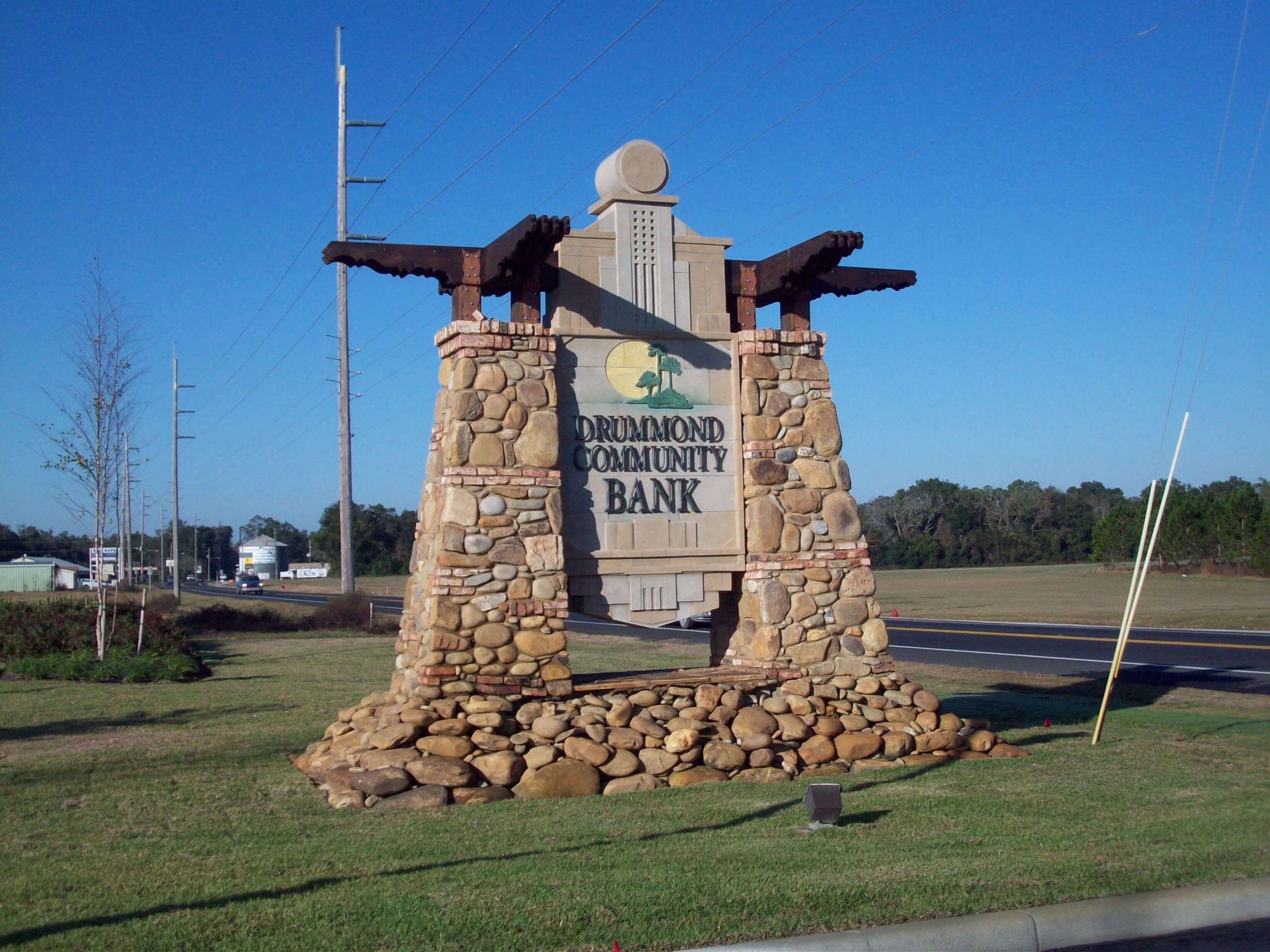
Drummond Community Bank
$1.1 Million

Sheltair Aviation Hangar
$1.6 Million · 19,000 SF
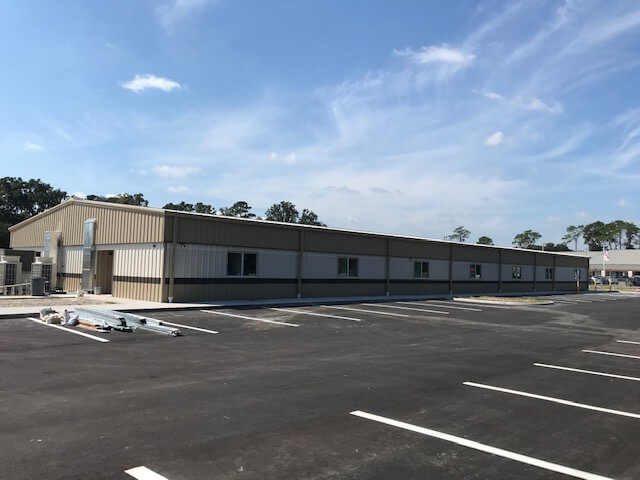
Suwannee County Admin Building
$1.5 Million · 10,000 SF
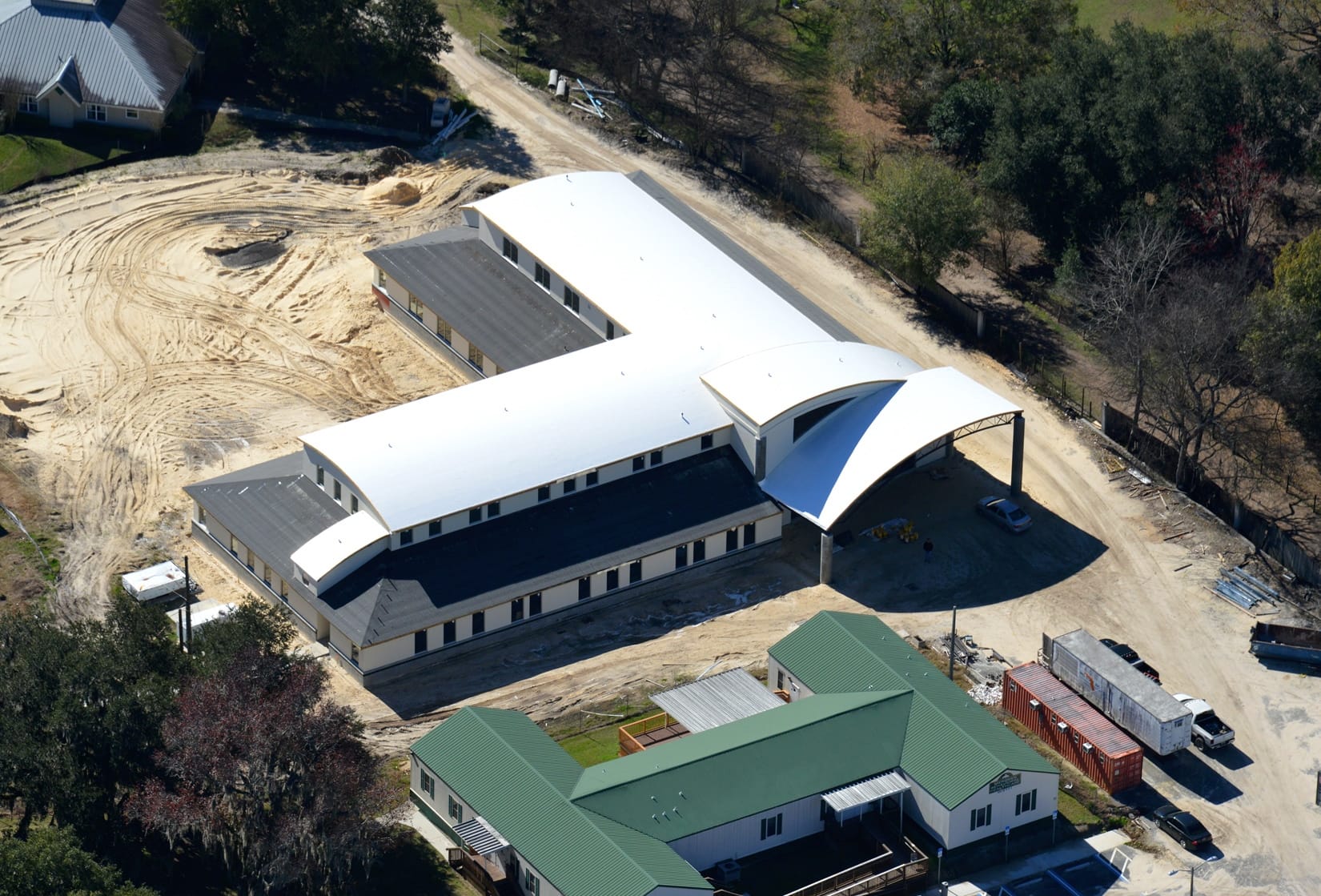
Meridian Administration Building
$2.9 Million · 24,000 SF

Fort White Elementary School
$8.8 Million · 24,000 SF
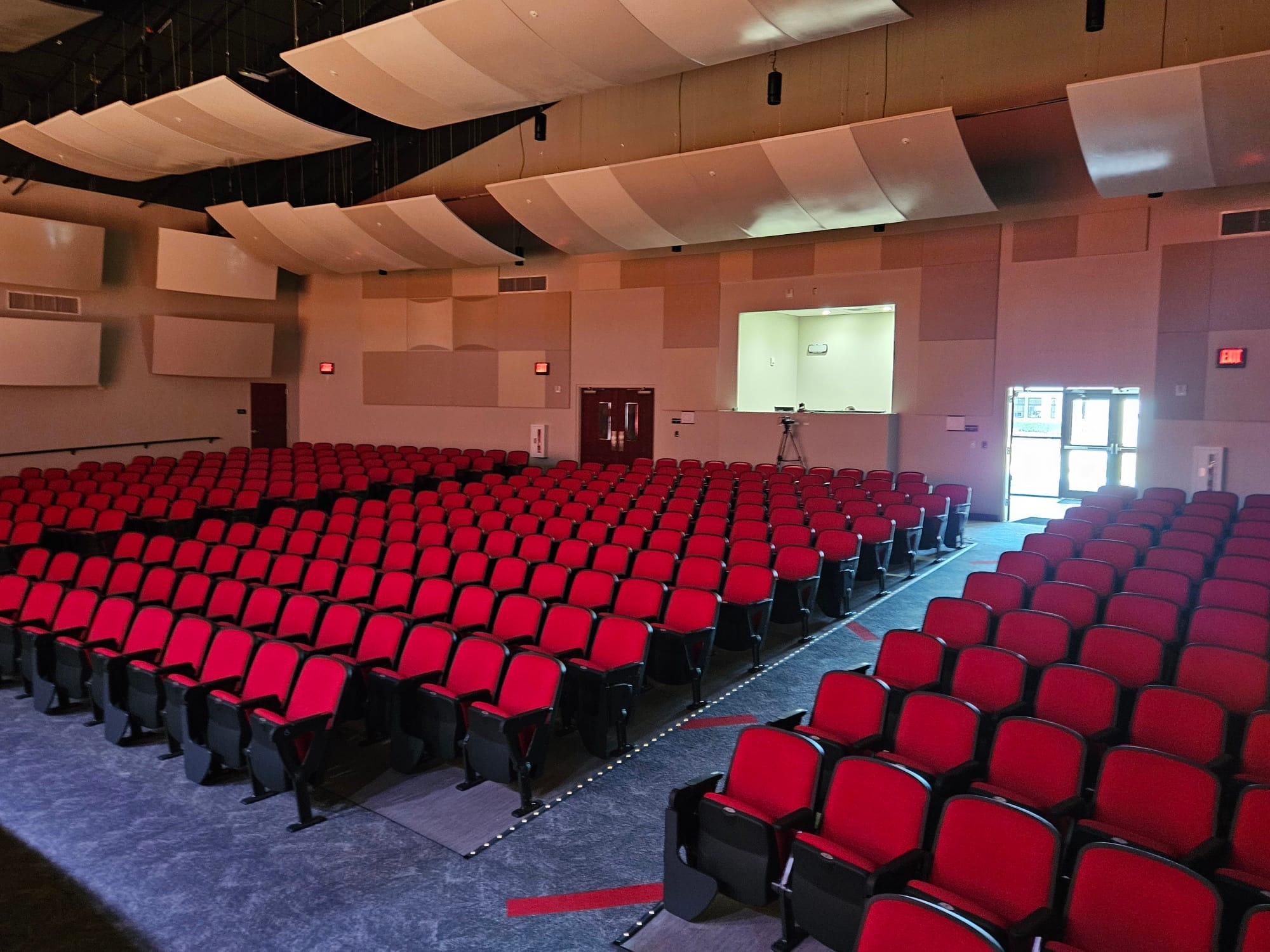
Ft. White High School Auditorium
$6.5 Million · 11,000 SF
Common questions
What is the difference between CM at-Risk and general contracting?
A general contractor is engaged after the design is complete and bids the finished documents. A construction manager at risk is engaged during design, contributes to constructability and budget, and then guarantees a maximum price. The owner gets builder input while the design can still change.
What does the guaranteed maximum price cover?
The GMP covers the cost of the work plus the construction manager's fee and contingency, up to a stated ceiling. Costs above that ceiling are the construction manager's responsibility. Savings below it are typically shared or returned to the owner, depending on the contract.
Is Agency CM cheaper than CM at-Risk?
It carries no contractor contingency and no risk premium, so the fee structure is usually lighter. The owner takes on the cost risk in exchange. Whether it is cheaper overall depends on how the project goes.
Do you self-perform work?
Gray Construction Services manages and contracts the trades. On CM at-Risk projects we hold those contracts; under Agency CM the owner does.
What size projects do you manage?
Our completed construction management work ranges from roughly $900,000 to $36.5 million, and from 3,700 to 175,000 square feet.
Other services
Pre-Construction Planning
The decisions that determine whether a project lands on budget are made long before anyone breaks ground.
Design-Build
One contract. One accountable party. No gap between what was designed and what gets built.
General Contracting
The traditional route, done properly: clear phases, competitive pricing, and one contractor answerable for the build.
Construction Consulting
Strategic guidance for owners who need a builder's read on a decision before they commit to it.