
General Contracting
General Contracting
The traditional route, done properly: clear phases, competitive pricing, and one contractor answerable for the build.
General contracting, also called design-bid-build, is the traditional method of project delivery. The owner completes a design, puts it out to bid, and selects a qualified general contractor to deliver the project. Gray Construction Services bids and builds work under this method throughout North Central Florida.
It remains the right method for a large share of public work, and for good reason. Competitive bidding on a complete set of documents produces a defensible price and a transparent award, which matters when the funds are public and the decision will be reviewed.
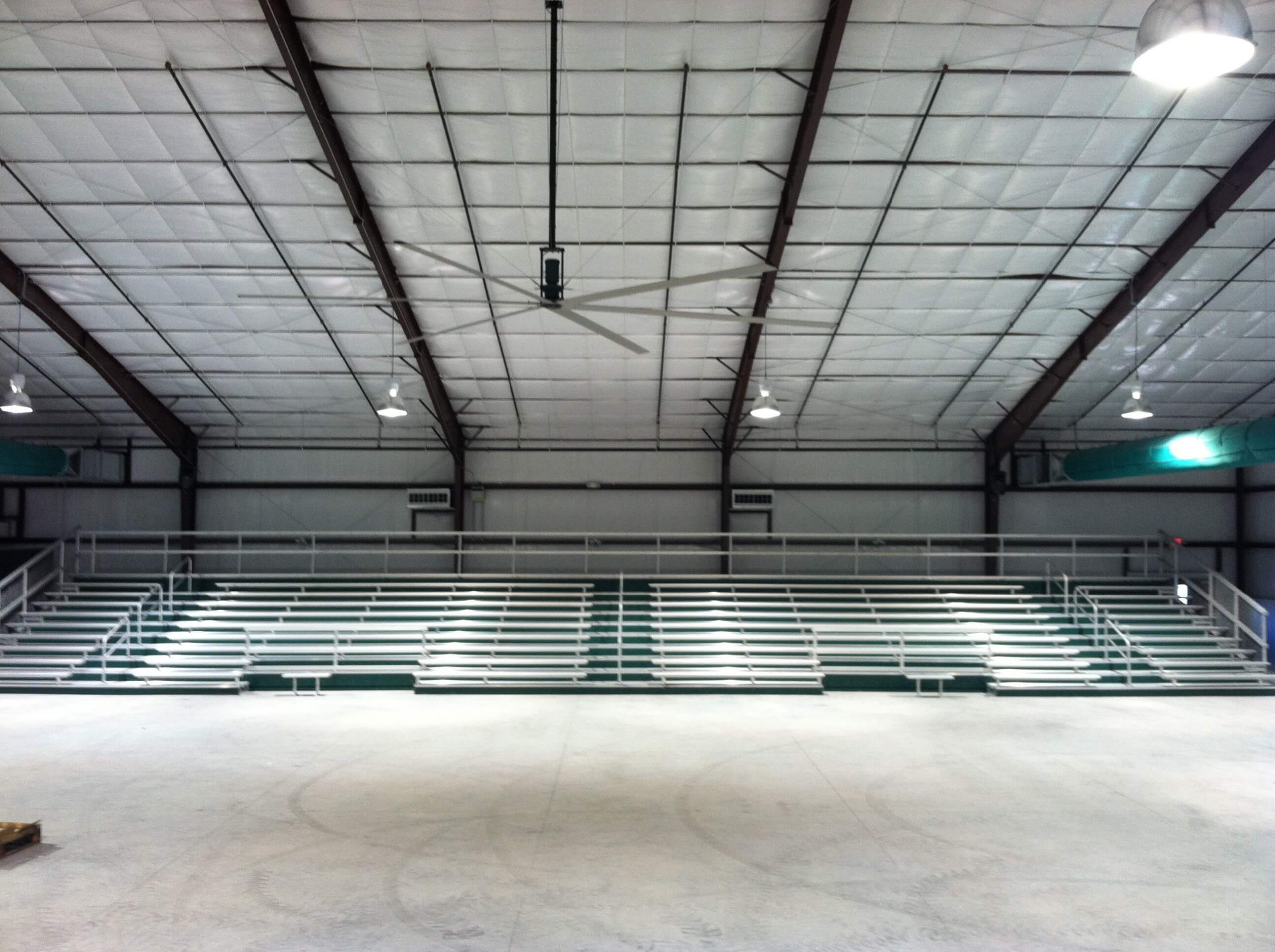
The 15,000 square foot Suwannee River Fair Livestock Building is one example of a project delivered this way.
What we take responsibility for
- Bid and buyout. Assembling qualified subcontractor coverage across every trade, and comparing bids on real scope rather than headline price.
- Schedule management. A working construction schedule maintained against the contract milestones, with the critical path identified and communicated.
- Site safety. Site-specific safety planning and enforcement, which carries additional weight on school and public facility sites.
- Quality control. Inspection and verification against the contract documents, with issues raised in writing while they are still correctable.
- Submittals, RFIs and change management. Documentation kept current so that questions get resolved without stopping work, and so the record is intact at closeout.
- Closeout and turnover. As-builts, warranties, O&M documentation and owner training delivered as a package rather than chased after occupancy.
Where design-bid-build works well
This method suits projects where the scope is fully definable in advance, where the owner has a complete and coordinated design, and where competitive price is the primary selection criterion.
It gives the owner an independent designer throughout, a clear basis for evaluating bids, and a straightforward contractual relationship. For many county and municipal projects it is also simply what the procurement rules require.
Where it strains
The method's weakness is that the contractor arrives after every design decision is fixed. Constructability problems in the documents become change orders rather than redlines. Long-lead items cannot be ordered until award. If the bid market has moved since the estimate was prepared, the owner discovers it at bid opening.
Owners who have been burned this way often move to construction management at-risk or design-build on their next project, or buy pre-construction services separately to get builder input into the documents before they go out.
None of that makes design-bid-build the wrong choice. It makes it a method with a known failure mode, which an owner can plan around. A complete, coordinated design and a current cost estimate remove most of the exposure. An incomplete design sent out to bid to save time reliably costs more than the time it saved.
How a low bid becomes a fair price
Competitive bidding only produces a fair price when the bids are genuinely comparable. Two numbers on the same project can differ by a wide margin simply because one carries a scope the other left out, or assumed a different allowance, or read an ambiguous detail differently.
Sorting that out is the work of buyout. Every bid is levelled against the documents trade by trade: what is included, what is excluded, what allowances are carried, what schedule is assumed. An apparent saving that turns out to be a gap in coverage is not a saving, it is a change order waiting to be written.
Owners can help this along by writing bid packages that divide the work at natural trade boundaries. Packages that split a scope awkwardly invite gaps at the seams, and those seams are where disputes start.
What happens after award
Once a contract is awarded, the contractor's job is to protect the owner's schedule and the owner's money while the documents are executed as written. In practice that runs on three things: a schedule that is actually maintained rather than filed, submittals and RFIs answered fast enough that work does not stall waiting on a decision, and change management that surfaces cost implications when they arise instead of at closeout.
On school and public facility sites there is a fourth: keeping construction operations separated from the people still using the building. Phasing, access control, dust and noise management and daily coordination with facilities staff are part of the contract, not a courtesy.
Closeout deserves the same attention as the start. As-builts, warranties, operations and maintenance documentation and owner training are assembled as the work proceeds, so the owner takes possession of a complete record rather than chasing paperwork after occupancy.
Common questions
Are you licensed to bid public work in Florida?
Yes. Gray Construction Services holds Florida certified general contractor licence CGC #062854 and has completed public projects for school districts, counties, municipalities and a state college.
How do you handle bidding opportunities?
Subcontractor bidding opportunities are posted through BuildingConnected, linked from the main navigation on this site.
Can we get a hard bid and a CM proposal on the same project?
Those are different procurement processes and are usually run separately. If you are deciding between delivery methods, that conversation is worth having before the solicitation is written.
What geography do you bid in?
North Central Florida, including Alachua, Gilchrist, Levy, Columbia, Marion, Dixie, Suwannee, Hamilton, Clay and Bradford counties.
Other services
Pre-Construction Planning
The decisions that determine whether a project lands on budget are made long before anyone breaks ground.
Construction Management
Two delivery models, one obligation: act in the owner's interest from conceptualization through final turnover.
Design-Build
One contract. One accountable party. No gap between what was designed and what gets built.
Construction Consulting
Strategic guidance for owners who need a builder's read on a decision before they commit to it.